The best active cooling systems cost $1,500+. But there are meaningful options under $500 that outperform passive solutions (sheets, fans, AC) for serious hot sleepers.
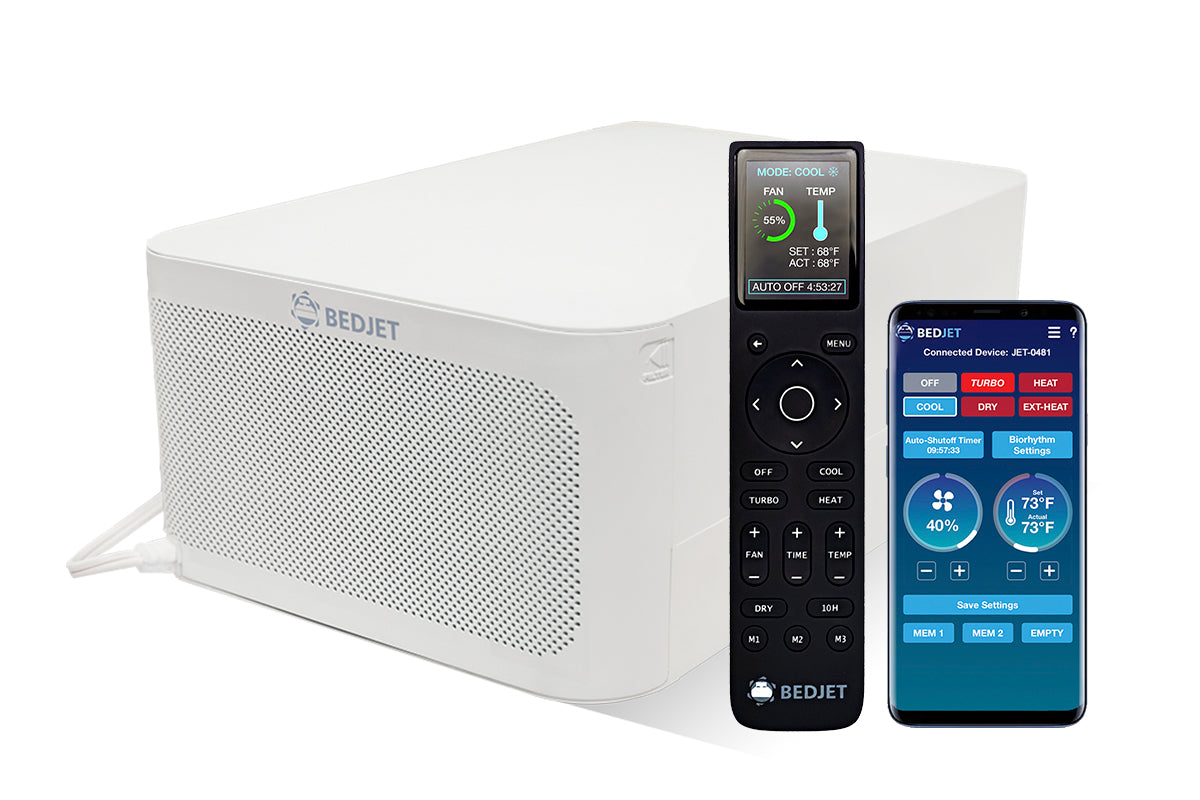
BedJet 3 Climate Comfort System
Pushes air under sheets, temperature controlled, significant relief for hot sleepers, no subscription
Hose visible, sheet attachment required, air-based not water-based

Honeywell HT-900 TurboForce Fan
Best airflow per dollar available, compact, durable, effective wind-chill
Standard fan — not under-sheet cooling, no temperature control
Chilisleep OOLER Sleep System
Water-based cooling (more efficient than air), app control, quiet, effective
Approaches $500, requires special pad on mattress
Why Passive Solutions Stop Working
Before spending money on active cooling, it’s worth understanding when to escalate.
Passive solutions work for: Mild hot sleepers whose temperature is borderline, or hot sleepers whose room temperature is the main variable. If fixing the AC, switching to percale sheets, and adding a fan solves the problem — great. You’re done.
Active cooling becomes necessary when: You’ve already optimized the room (65–67°F), switched to breathable sheets, added a fan, and still wake up sweating regularly. At this point, the heat is coming from inside — metabolic heat your body is generating that passive solutions can’t remove fast enough.
Air vs. Water Cooling
Active cooling systems use one of two mechanisms:
Air-based (BedJet): Pushes temperature-controlled air under your sheets. Creates a wind-chill effect directly at the sleep surface. You feel the air movement. Effective, affordable, no subscription.
Water-based (ChiliSleep OOLER, Eight Sleep): Circulates temperature-controlled water through a pad under your sheet. Water conducts heat 25x more efficiently than air. You don’t feel anything — just the temperature change. More effective than air, higher cost.
Under $500, you’re choosing between the BedJet 3 (air) and the ChiliSleep OOLER (water). The OOLER is more effective; the BedJet is more affordable. Both outperform any passive solution for severe hot sleepers.
Setup and Maintenance
BedJet: Plug in beside the bed, attach the flexible hose under the sheet. Takes five minutes. No maintenance beyond occasional filter cleaning.
ChiliSleep OOLER: Fill the reservoir with water and a small amount of distilled water additive, place the pad on the mattress, connect the hose. Takes 20 minutes. Clean the reservoir every 3–4 months.
Related articles: