A fan doesn’t lower room temperature — but it creates a wind-chill effect that makes you feel 4–6°F cooler. For mild-to-moderate hot sleepers, a quality fan aimed correctly is often all that’s needed.
How Fan Placement Affects Cooling
The goal is airflow across your body, not at your face. Aim the fan so air moves across your torso and legs. This maximizes evaporative cooling of sweat while avoiding dryness and irritation from direct face exposure.
For the best effect: position the fan at foot-of-bed level, angled slightly upward, aimed across the length of the bed.

Honeywell HT-900 TurboForce Fan
Powerful airflow for the price, compact, 90-degree tilt, 3 speeds
Louder than premium fans at high speed

Vornado FLIPPI V6 Personal Air Circulator
Compact, quiet on low, tilts to any angle, Vortex technology circulates air efficiently
Smaller coverage area than larger fans
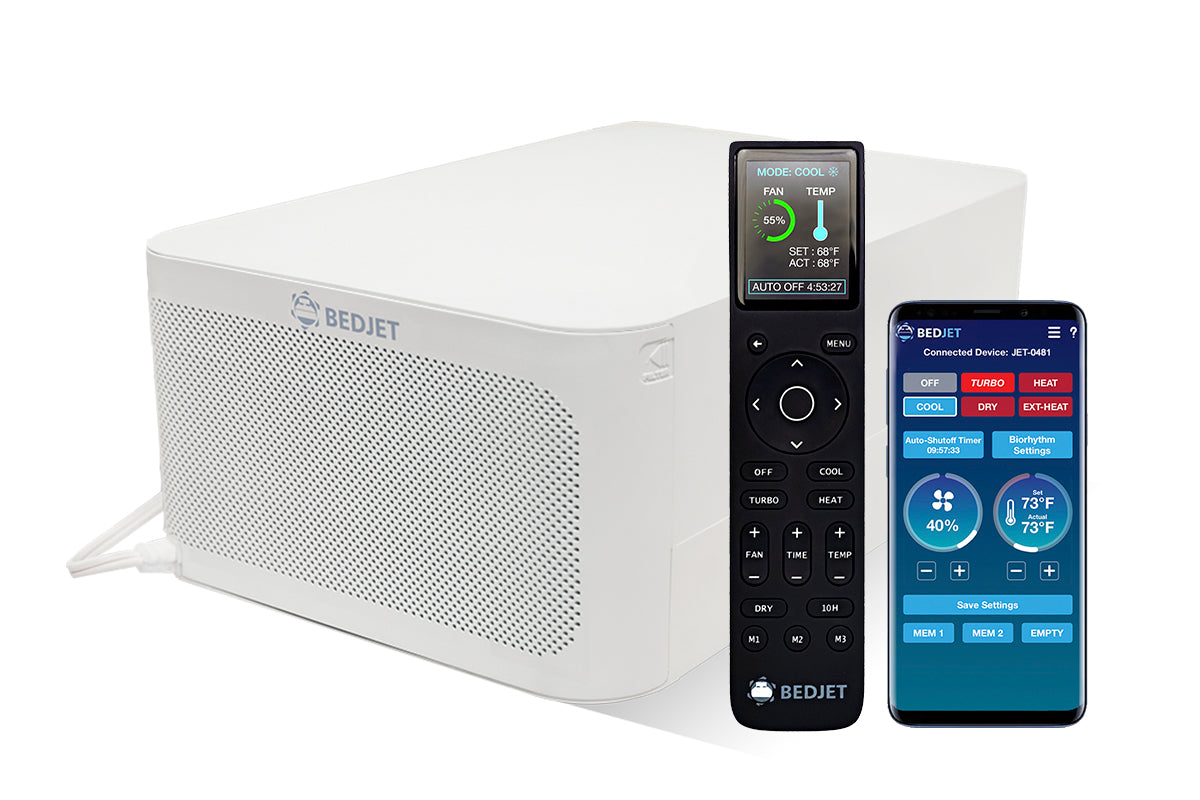
BedJet 3 Climate Comfort System
Pushes air directly under sheets, temperature-controlled, most effective air-based solution
Expensive compared to standard fans, hose attachment required
Ceiling Fan Settings for Hot Sleepers
If you have a ceiling fan, check the direction switch:
Summer (counterclockwise): Blades push air straight down, creating wind-chill below. Run on medium or high.
Winter (clockwise): Pulls air up, pushes warm air from ceiling back down. Wrong setting for cooling.
Many people run their ceiling fan on the wrong setting in summer. Switching to counterclockwise costs nothing and makes an immediate difference.
Related articles: